Cloudy glasses? Check before you scrub.
A removable coating and damaged glass can look frustratingly similar. Start with one compatible glass before buying another cleaner.
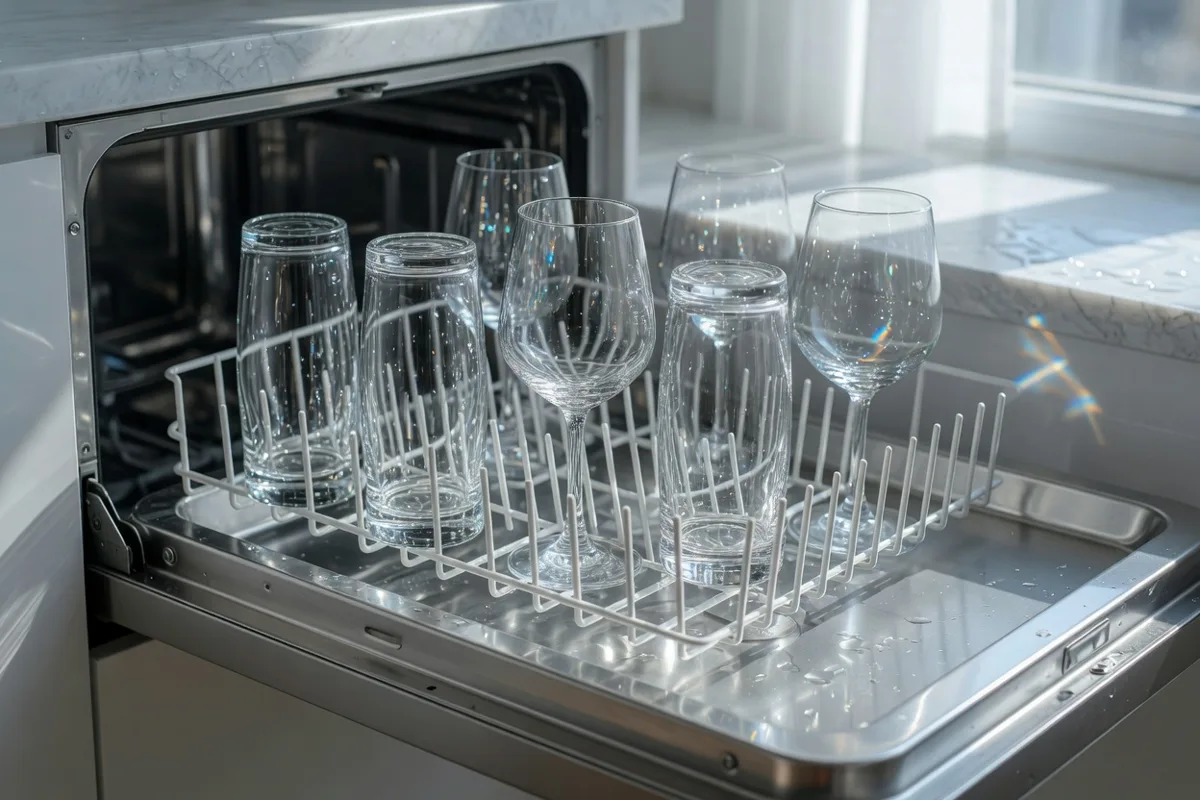
Our take: a small spot test can guide the next step. If the haze stays, pause before harsher treatment. Vinegar cannot repair etched glass. [S1]
What changed at the surface?
Check one glass, outside the dishwasher
Find the care instructions first. “Dishwasher safe” is a product-specific claim; it does not make every cleaning treatment suitable. If the finish or material is uncertain, skip the acid test and ask the maker.
- Start with an intact glass at room temperature and a clean, empty work area. Keep other cleaning chemicals out of the test. [S8]
- On a glass whose care instructions allow it, dampen a soft cloth with a little ordinary white food vinegar and gently rub one cloudy patch. Avoid aggressive scrubbing.
- Rinse thoroughly, dry and compare the patch with the rest of the glass. Improvement is a useful clue; a stubborn patch does not identify the cause by itself.
Whirlpool describes a vinegar spot test for mineral film. Its product-help guidance also notes that film which stays may be etching or silica film. [S1] [S2]
What happened to the patch?
Choose an observation to highlight its guidance.
Clean the removable film
If the glassmaker permits it, Whirlpool’s method for mineral-coated glasses uses a separate 15-minute white-vinegar soak, then handwashing with dish soap and warm water. Rinse thoroughly and dry with a soft cloth. Keep this treatment outside the machine. [S2]
Use the care instructions
A plain tumbler and a painted heirloom need different decisions. Handwash as the maker directs while you identify the glass and finish. RIEDEL, for example, requires handwashing for its items marked handwash-only or supplied without care instructions. [S3]
These are troubleshooting branches, not a lab test. More than one cause can be worth investigating.
Fix the wash conditions before shopping
GE Appliances lists loading, rinse aid and detergent among the causes to check when dishes come out spotted or filmed. Begin with the instructions for your dishwasher and detergent. [S4]
| Check | Useful action | Limit |
|---|---|---|
| Detergent + water | Match the dose to water hardness and the product’s directions. | “Use more” and “use less” are not universal fixes. [S5] |
| Rinse aid | Check the reservoir and use the dispenser setting in your manual. | It helps water sheet off and reduces spotting; it does not rebuild etched glass. [S4] [S5] |
| Loading | Leave space around glasses; use the appropriate rack or stem holders. | A dishwasher-safe label does not prevent damage from glass touching other items. [S3] |
| Cycle | Use a suitable glass program or the shortest effective cycle allowed by the instructions. | Do not change household water-heater settings from a generic glass-care tip. [S3] [S5] |
Manufacturer guidance, not comparative product testing. Exact doses and cycle settings depend on your equipment and glassware.
A glass soak is not a dishwasher-cleaning recipe
Whirlpool cautions that using vinegar too often could damage a dishwasher. Check the model manual for machine cleaning, compatible products and frequency. Use only the products specified for each dispenser, and do not improvise mixtures of cleaning products. [S6] [S7]
What is worth buying?
For a first check, you may already have a suitable soft cloth and ordinary white food vinegar. A new cleaner makes sense only when its label covers the job and your dishwasher or glassmaker permits it. Rinse aid addresses drying and spotting. A machine cleaner addresses the machine. Neither is a repair for corrosion.
Our recommendation is to diagnose first and buy for the remaining problem. That approach can avoid an unnecessary replacement, but the spot test cannot certify that a glass is safe, identify every film or guarantee a clear finish.
Before the next load
Before you try another fix
Does cloudy always mean dirty?
No. Mineral deposits can cloud clean glass, and corrosion changes the surface itself. Appearance alone cannot establish cleanliness or safety. [S1] [S3]
Should I use less detergent?
Check the dose instructions and water hardness first. Soft water may need less detergent, while hard water can call for a different dose. Avoid an arbitrary half-dose rule. [S5]
Will rinse aid remove old etching?
No. Rinse aid helps the rinse water leave the dishes; etched glass has permanent surface damage. [S4] [S5]
Should every glass go in the top rack?
Follow both manuals. RIEDEL recommends the top rack where possible, but gives specific exceptions for tall glasses and suitable glass programs. If a glass cannot be loaded safely, handwashing may be the appropriate choice. [S3]
Sources
Primary manufacturer guidance and CDC cleaning safety, checked October 13, 2026. Recommendations here are editorial interpretation of that guidance; no hands-on results are claimed.
- S1 · Whirlpool: filming or etching
- S2 · Whirlpool: cleaning cloudy glasses
- S3 · RIEDEL: glass care and use
- S4 · GE Appliances: spotting, grit and film
- S5 · GE Appliances: etching on glassware
- S6 · Whirlpool: cleaning the dishwasher interior
- S7 · CDC: cleaning and disinfecting with bleach
- S8 · Libbey: care and handling