Space heater on a power strip? Plug it into the wall.
CPSC calls portable electric heaters high-wattage appliances. Before you buy a “heavy-duty” strip or a thicker extension cord for it, check where it is plugged in, whether the plug feels hot, and what sits within 3 feet.
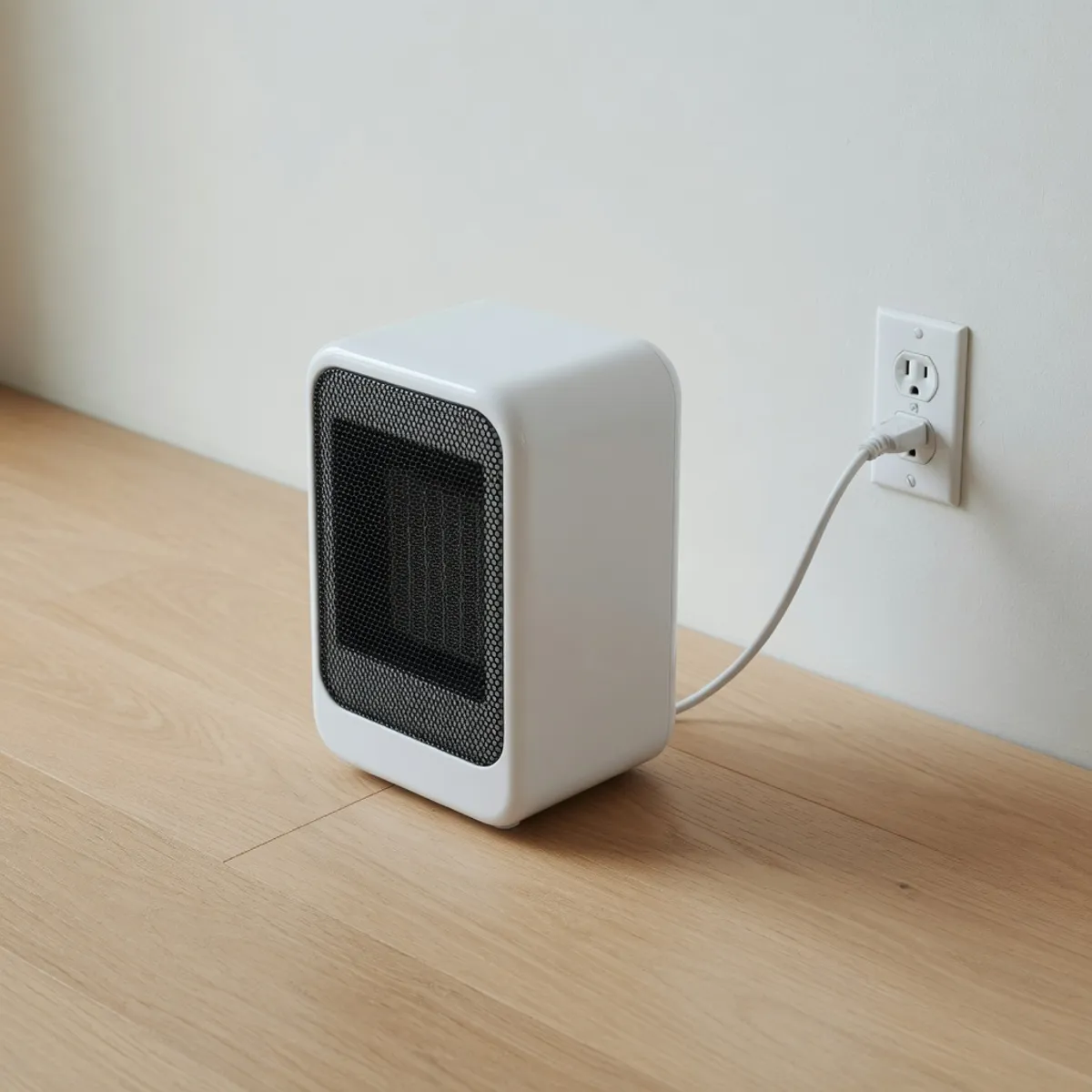
Our take: don’t spend money on a better cord for a space heater. CPSC, the U.S. Fire Administration, ESFI and the heater’s own manual all say the same thing: plug it straight into a wall outlet, keep that outlet to itself, and never run it through an extension cord or power strip. Then clear 3 feet around it and turn it off when you leave the room or go to bed. [S1] [S5] [S7]
Two rules before you switch it on
Start with where it is plugged in
The federal guidance is blunt about how to power a space heater. CPSC says to plug electric space heaters directly into a wall outlet and never into an extension cord or power strip. The Lasko AW300 manual goes further and also rules out surge protectors, multiple-outlet adapters, cord reels and plug-in air fresheners, and says not to put other devices on the same outlet or circuit. [S1] [S2] [S7]
- Follow the cord. If it ends in a power strip, surge protector, adapter or extension cord, move the plug to a wall outlet before anything else. [S2] [S7]
- Look at what else shares that outlet. ESFI says not to plug other devices into the same outlet as the heater, and USFA says not to plug anything else into the same circuit. [S6] [S5]
- Check the fit. CPSC says the plug should fit tightly in the wall outlet, and if it doesn’t, not to use that outlet for the heater. [S2]
- After it has run a while, touch-check the plug, cord and outlet cover. CPSC says to check them often during use. [S2]
Enter the watts to see roughly how much current the heater asks for.
The calculator only divides watts by 120 volts. It is arithmetic, not an inspection of your wiring or a statement about what your circuit can carry.
Where is your heater plugged in right now?
Choose a setup to highlight its guidance.
Skip the heavier cord too
Current CPSC guidance and the Lasko manual both say never to use an extension cord with the heater. You may find older advice that allows a #14 or #12 gauge cord when it’s absolutely necessary; that text is a republished older CPSC bulletin, and we follow the current guidance and the manual instead. If no wall outlet is within reach, move the heater to one. [S1] [S7] [S8]
Unplug it and get the outlet or heater checked
Older CPSC text notes a cord and plug can feel warm because heaters draw a lot of power. Hot is different: CPSC says to stop using the heater and have an electrician check the plug or outlet, or an authorized repair person check the heater if the cord is hot. Lasko also warns that faulty outlet connections can overheat. [S8] [S2] [S7]
These are agency, nonprofit and manufacturer guidance branches, not an electrical inspection of your home.
Then clear 3 feet and pick a flat floor
CPSC, NFPA, USFA and ESFI all use the same distance: keep anything that can burn at least 3 feet from the heater. CPSC applies it to the front, sides and rear. The Lasko AW300 manual asks for 3 feet in front but only 1 foot at the sides and rear for that model. Keeping 3 feet all the way around satisfies both. [S2] [S3] [S4] [S6] [S7]
| Setup | Useful action | Limit |
|---|---|---|
| Wall outlet, nothing else on it | Leave it. Check the plug stays snug and cool. | Doesn’t confirm your wiring; that’s an electrician’s job. [S2] [S7] |
| Wall outlet shared with other devices | Unplug the other devices from that outlet. | USFA and Lasko also say to keep other loads off the same circuit. [S5] [S7] |
| Power strip, surge protector or adapter | Move the heater to a wall outlet. | No current source we read makes an exception for heavier strips. [S1] [S2] [S7] |
| Extension cord or cord reel | Move the heater to a wall outlet. | Older gauge-based advice is superseded by current CPSC guidance. [S1] [S8] |
| Loose plug | Don’t use that outlet for the heater. | A worn outlet needs a qualified electrician. [S2] [S7] |
| Hot plug, outlet or cord | Stop using the heater. | Electrician for the outlet, authorized repair for the heater. [S2] |
Agency, nonprofit and manufacturer guidance, not comparative product testing. Check your own heater’s manual; models differ.
Floor, cord and the habits that matter
Set the heater on a stable, flat, level surface where it won’t be knocked over, and out of walkways and doorways. ESFI says never to put it on cabinets, tables, furniture or carpet, and the Lasko manual says not on soft surfaces like a bed. Keep it away from water; the Lasko manual says the model isn’t for bathrooms or laundry areas. ESFI adds that a space heater should never be used to warm bedding, dry clothes or thaw pipes. [S2] [S6] [S7]
The off switch matters as much as the plug. CPSC says to turn heaters off when sleeping, and NFPA and USFA say to turn them off when you leave the room or go to bed. CPSC estimates portable heaters are involved in an average of 1,600 fires a year, with 70 deaths and 150 injuries, from 2020 to 2022. [S1] [S3] [S4]
What is worth buying?
Not a heavy-duty power strip or a thicker extension cord for the heater. If you are shopping for a heater itself, USFA says to make sure it has been tested by a recognized testing laboratory and has an automatic shutoff if it tips over, and CPSC says to look for a safety certification mark and check for recalls before use. [S5] [S2] [S1]
Our recommendation is to fix the setup before spending. That avoids a wasted purchase, but it can’t tell you whether an outlet or circuit is sound, and it doesn’t replace an electrician’s check.
Before you switch it on tonight
Before you buy another cord
Can I use a heavy-duty extension cord?
Current CPSC guidance says never to power an electric heater with an extension cord or power strip, and the Lasko AW300 manual says the same. An older CPSC bulletin, still republished online, allowed a #14 or #12 gauge cord when absolutely necessary. We follow the current guidance and your manual. [S1] [S2] [S7] [S8]
Is a surge protector different from a power strip?
Not for this purpose. The Lasko manual lists surge protectors alongside power strips, multiple-outlet adapters and cord reels as devices not to plug the heater into. [S7]
Is it normal for the plug to feel warm?
Older CPSC text says the cord and plug may feel warm because heaters draw a lot of power. If the plug, outlet or faceplate is hot, CPSC says to stop using the heater and have it checked. [S8] [S2]
Can I leave it on while I sleep?
No. CPSC says to turn heaters off when sleeping, and NFPA and USFA say to turn them off when you leave the room or go to bed. [S1] [S3] [S4]
How much current does my heater draw?
Divide the watts on its rating label by 120 volts for a rough figure. A heater labeled 1,500 watts works out to about 12.5 amps. That is arithmetic, not a judgment about your wiring; use the manual and an electrician for that.
Sources
CPSC, U.S. Fire Administration, NFPA, ESFI and manufacturer guidance, checked October 14, 2026. Recommendations here are editorial interpretation of that guidance; no hands-on results are claimed.
- S1 · CPSC: Keep warm and safe this winter (release 26-217)
- S2 · CPSC Publication 098: Reducing fire hazards for portable electric heaters
- S3 · NFPA: Home heating safety
- S4 · U.S. Fire Administration: Heating fire safety
- S5 · U.S. Fire Administration: Heater fire safety card
- S6 · ESFI: Space heater safety tips
- S7 · Lasko AW300 bladeless ceramic heater operating manual
- S8 · UC Office of the President Risk Services: older CPSC space heater bulletin