Hot tap water? Set the heater to 120°F first.
CPSC urges everyone to lower their water heater to 120°F and to check the result with a thermometer at the faucet. Do that before you shop for anti-scald valves or faucet gadgets, then decide whether you still want one.
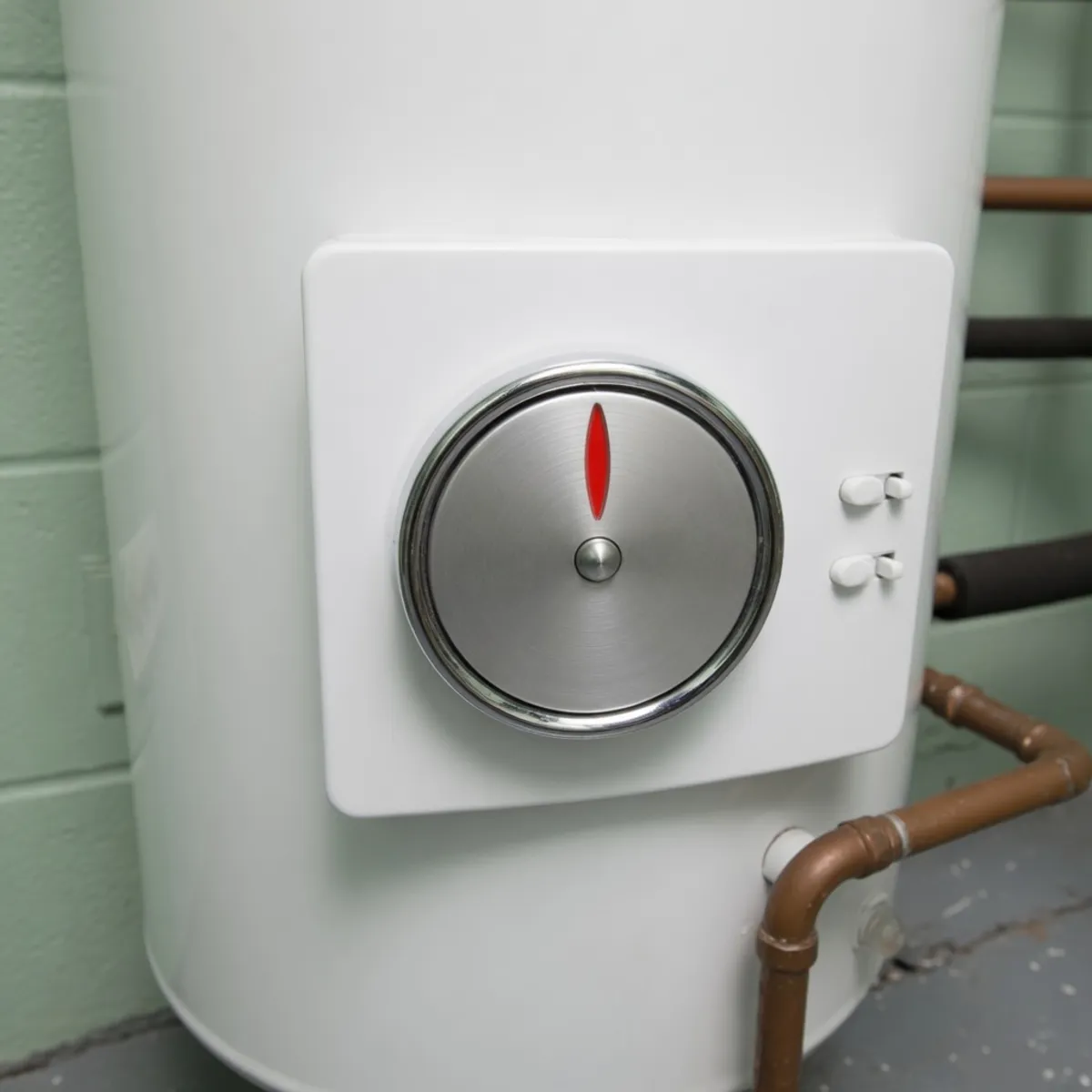
Our take: the first fix for scalding tap water costs nothing. Measure the hot water at a faucet with a candy or meat thermometer, set the water heater to 120°F the way its manual says, and measure again. The number on the dial isn’t proof on its own: in one study of 976 urban homes, hot water ran above 120°F in 41% of them. An anti-scald device can still make sense afterward, especially with young children or older adults at home, but as a second layer, not a substitute. [S1] [S4] [S5] [S2]
Set it, then prove it at the tap
Measure the hot water before you touch the dial
CPSC’s tap-water scald guide says to hold a candy or meat thermometer under the faucet, and that the most accurate reading comes first thing in the morning or at least two hours after water use. DOE’s Building America Solution Center describes a slightly different routine: go to the faucet nearest the water heater, run only the hot tap for about 3 minutes, fill a mug and read it right away. Both end the same way: if the reading is too high, adjust, then check again. [S1] [S4]
- Use a cooking thermometer, candy or meat, not a fever thermometer. The Solution Center warns that older mercury fever thermometers can break above 110°F. [S1] [S4]
- Pick a time when the tank hasn’t just been drained: first thing in the morning, or two hours after showers, laundry or dishes, as CPSC suggests. [S1]
- Run the hot tap alone until it’s as hot as it gets (the Solution Center suggests about 3 minutes), then read the water in a mug immediately. [S4]
- Note the reading, the faucet and the time. CPSC says to check again with the thermometer after any adjustment, so recheck the same faucet the same way. [S1]
Enter your faucet reading to compare it with the 120°F guidance.
The reading check only compares your number with the published guidance. It doesn’t test your heater, valves or pipes, and nothing you type is saved or sent.
Why 120°F, and why seconds matter
CPSC says most tap-water scald injuries and deaths involve older adults and children under five, and urges everyone to lower their water heater to 120°F. It adds that the change also conserves energy and saves money. DOE’s Energy Saver guide calls 120°F “a temperature considered safe for most of the population,” and the Solution Center says each 10-degree reduction saves about 5% in energy use. [S1] [S3] [S4]
| Water temperature | CPSC Publication 5098 | Rheem manual label (Shriners table) |
|---|---|---|
| 150°F | Third-degree burns for most adults in two seconds | About 1½ seconds [S6] |
| 140°F | Burns with a six-second exposure | Less than 5 seconds [S6] |
| 130°F | Burns with a thirty-second exposure | About 30 seconds [S6] |
| 125°F | Not listed | 1½ to 2 minutes [S6] |
| 120°F | A five-minute exposure could result in third-degree burns [S1] | More than 5 minutes [S6] |
The two tables measure slightly different things (CPSC: third-degree burns in most adults; Rheem’s label: time to produce a serious burn), so they are shown side by side, not merged. CPSC and the Rheem label both single out children and older people as most at risk. [S1] [S6]
Turn it down the way your heater’s manual says
How you lower the temperature depends on the heater. CPSC’s guide splits its advice by heater type, and every source here defers to the manufacturer’s instructions. Pick yours to highlight the matching branch. [S1] [S4] [S6]
Choose a heater type to highlight its guidance.
Power off first, and look for two thermostats
CPSC says to shut off power at the circuit breaker or fuse before adjusting, and that most electric water heaters have two thermostats behind upper and lower access panels, both of which must be set to a common temperature. It also says hot water should not be used for at least two hours before setting, and suggests calling your electric company, noting that some offer the adjustment at no charge. The Rheem manual we read describes the same pattern: power off, remove the access panels and insulation, set each dial with a small screwdriver, then restore power. [S1] [S4] [S6]
Follow the manual or ask your gas company
CPSC says gas thermostats differ and to call your local gas company for instructions. Some dials show numbers, others letters or another designation; the Solution Center says to check the owner’s manual for the setting that corresponds to 120°F. In the home study, electric heaters were more likely than gas heaters to deliver safe temperatures, and 11% of gas heaters ran at 130°F or hotter even with the dial below 75% of its maximum, so trust the faucet reading over the dial. We don’t cover gas valve or burner work. [S1] [S4] [S5]
Ask your fuel supplier
If you don’t have an electric, gas or oil-fired water heater, CPSC says you probably have an on-line hot water system and should contact your fuel supplier to have the temperature lowered. CPSC adds that reducing water temperature won’t affect the furnace’s heating capacity. [S1]
Ask the building manager, and measure anyway
If you live in an apartment, CPSC says to contact the building manager about options for lowering your tap water temperature. In the home study, renters were less likely than homeowners to have hot water at or below 120°F (54% vs. 63%). Bring your faucet reading to that conversation. If the heater can’t be changed for you, faucet and shower anti-scald devices become the practical layer; ask before installing anything. [S1] [S5] [S2]
These branches summarize agency, nonprofit and manufacturer guidance. They are not a plumbing, gas or electrical inspection of your home.
Where the sources pull in different directions
Two thermostats, two numbers. CPSC says both thermostats on an electric tank should be set to a common temperature. The Rheem manual says its thermostats are factory set at 120°F or less where local codes require and calls that “the recommended starting point,” but for the best first-hour hot water delivery it suggests 125 to 130°F on the upper thermostat and 120°F on the lower. Because that upper setting sits above 120°F, we’d start with both at 120°F and let the faucet reading decide. [S1] [S6]
The dishwasher. CPSC suggests the lowest setting that still satisfies your dishwasher and clothes washer. DOE says that if your dishwasher has an internal heating element that boosts water temperature, you can set the water heater to 120°F, and to check the dishwasher manual for your model. If that manual asks for hotter incoming water, weigh it against the scald figures above instead of quietly turning the heater back up. [S1] [S3]
Legionella. ASSE International’s scald white paper cites a plumbing engineers’ position that tank water be stored at 135 to 140°F to limit Legionella growth, and calls this a direct conflict with safe delivery temperatures. Its answer is hotter storage paired with mixing or temperature-limiting valves, chosen by a qualified service person or plumbing engineer. We don’t assess Legionella risk. If it’s a concern for your home or building, take it to a licensed plumber, and health questions to a doctor, rather than settling it by turning the dial up. [S8]
Then decide whether you still want an anti-scald device
Setting the heater is where every source here starts, but it isn’t the only layer. CPSC’s childproofing guide says the water heater can be set to 120°F or lower and that anti-scald devices for faucets and shower heads can also be used to prevent burns. NFPA says to install anti-scald devices on tub faucets and shower heads. [S2] [S7]
Plumbing groups go further. ASSE’s white paper argues that a tank’s thermostat can’t precisely control temperature at the tap, since short, repeated draws can stack water hotter than 140°F at the top of the tank, and recommends a qualified assessment for mixing valves, automatic compensating shower valves or temperature-limiting devices. Rheem’s manual recommends a mixing valve meeting ASSE 1017 and says to contact a licensed plumber or the local plumbing authority. The home-study authors also point to thermostatic mixing valves. [S8] [S6] [S5]
Our recommendation: set and verify first, because it’s free and affects every hot tap in the home. A device is worth a closer look if young children, older adults or anyone who needs help bathing lives with you, if you rent and can’t change the heater, or if readings stay above 120°F after adjusting. Valves at the heater or inside the shower wall are installer work, and we don’t recommend a specific product.
Before tonight’s bath
Before you buy an anti-scald gadget
Isn’t my heater already set to 120°F at the factory?
Maybe. Rheem says its thermostats ship at 120°F or less where local codes require, and the home study notes manufacturers adopted a voluntary 120°F preset in the 1980s. Yet hot water was above 120°F in 41% of the 976 homes measured. Settings get changed, and ASSE notes tank thermostats aren’t precise at the tap, so measure. [S6] [S5] [S8]
My dial says “Hot” or uses letters. Which one is 120°F?
The Solution Center says to check the owner’s manual for the setting that corresponds to 120°F, and that PDFs of many manuals can be found online by searching the brand and model number. Then confirm at the faucet. [S4]
Will 120°F be hot enough for my dishwasher?
Check its manual. DOE says a dishwasher with an internal heating element that boosts water temperature can work with a 120°F water heater, and CPSC suggests the lowest setting that still satisfies your dishwasher and clothes washer. [S3] [S1]
Doesn’t cooler water raise Legionella concerns?
Some plumbing groups say so. ASSE’s white paper cites a recommendation to store tank water at 135 to 140°F and to use mixing valves so taps still deliver a safe temperature. That is a system design question for a licensed plumber, and health questions belong with a doctor. This guide doesn’t assess it. [S8]
If the tap reads 120°F, do I still need anti-scald devices?
Not necessarily, but they can still help. CPSC notes that a five-minute exposure at 120°F could result in third-degree burns, and NFPA says bath water should be less than 100°F. CPSC lists anti-scald devices as an added layer for faucets and shower heads and says leaving a child unsupervised in the bathroom, even for a second, could cause serious injuries. [S1] [S2] [S7]
What if someone gets scalded?
NFPA’s tip sheet says to cool the burn with cool water for 3 to 5 minutes, cover it with a clean, dry cloth and get medical help if needed. For anything beyond a minor burn, get medical help. [S7]
Sources
CPSC, DOE, NFPA, ASSE International, a CDC-hosted peer-reviewed study and one manufacturer manual, checked October 14, 2026. Recommendations here are editorial interpretation of that guidance; no hands-on results are claimed.
- S1 · CPSC Publication 5098: Avoiding tap water scalds
- S2 · CPSC: Childproofing your home (safety devices guide)
- S3 · U.S. Department of Energy: Energy Saver guide (2022 edition, PDF)
- S4 · DOE Building America Solution Center (PNNL): Check water heater temperature
- S5 · Shields et al., Still too hot (J Burn Care Res 2013), CDC Stacks record
- S6 · Rheem Electric Residential Water Heaters Use & Care Manual (double element, AP23124 Rev 01)
- S7 · NFPA: Scald prevention safety tips (tip sheet)
- S8 · ASSE International Scald Awareness Task Group: Understanding potential water heater scald hazards (white paper, revised May 2013)